
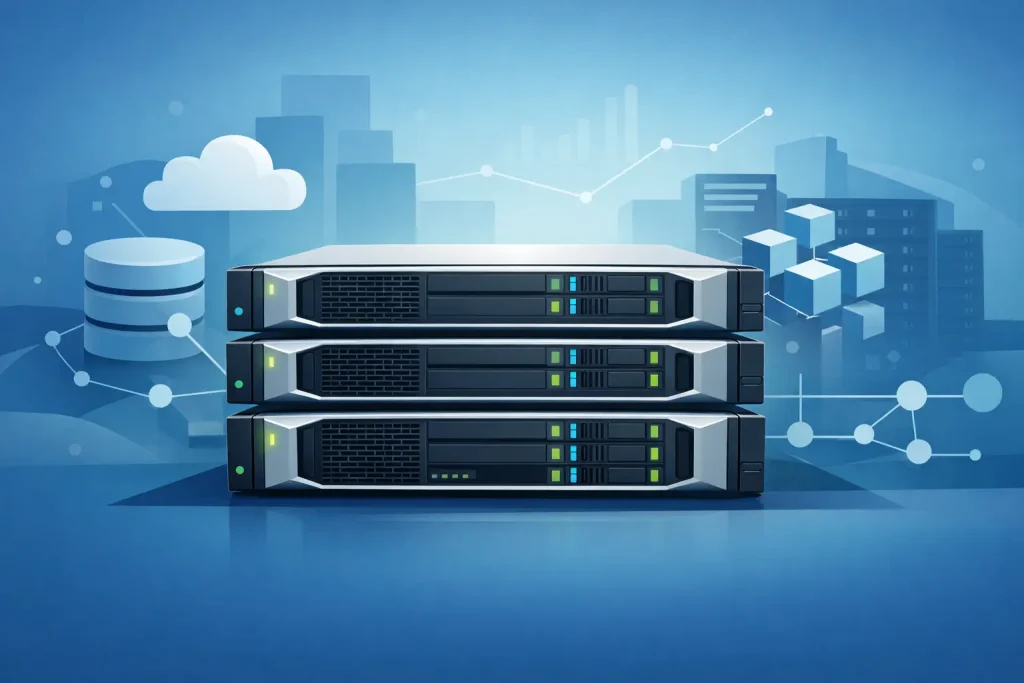
A server refresh is rarely about replacing an old chassis. It is a decision about application performance, storage growth, security controls, rack capacity, and the cost of supporting the platform for years. DL380 G12 servers are designed for organizations that need a versatile 2U enterprise platform without committing to a specialized system for every workload.
For IT teams, the value lies in configuration flexibility. A properly specified HPE ProLiant DL380 Gen12 can support virtualized business applications, databases, file services, private cloud workloads, analytics, and demanding line-of-business systems from one familiar rack server platform. The right result, however, depends on matching processors, memory, storage, networking, and acceleration options to actual operational requirements.
Why DL380 G12 Servers Fit Enterprise Growth
The DL380 platform has long been a practical choice for businesses that need balanced compute density and expansion room. The Gen12 generation continues that approach with newer processor options, higher performance potential, modern memory and storage support, and security capabilities built for a changing threat environment.
A 2U form factor provides an advantage over compact 1U systems when internal expansion matters. Organizations can build configurations with significant memory capacity, multiple drive bays, high-speed network adapters, RAID or storage controllers, and accelerator options while keeping the server manageable in standard data center racks. This is useful for companies consolidating several aging systems into fewer, more capable hosts.
The platform is particularly relevant when a business wants standardization. Rather than purchasing separate server families for virtualization, file storage, and database services, an IT department may be able to use a consistent DL380 Gen12 configuration strategy across several sites or departments. Standardized hardware can simplify provisioning, spare-parts planning, firmware management, and support procedures.
That said, one server model is not automatically the right answer for every deployment. Organizations with extreme GPU requirements, unusually dense compute needs, or large-scale storage demands may benefit from a more specialized platform. The DL380 Gen12 is strongest where flexibility, serviceability, and broad workload support are the priorities.
Performance Starts With the Right Configuration
The server chassis is only the foundation. Business value comes from the configuration inside it. Procurement teams should avoid comparing systems only by processor count or advertised clock speed, since workload behavior is often shaped by memory, storage latency, and network throughput just as much as CPU resources.
Processor and memory planning
For virtual machine hosts, core count and memory capacity usually deserve early attention. A host with ample processing power but insufficient memory can limit consolidation and force unnecessary infrastructure expansion. Database applications may require a different balance, depending on whether they are CPU-bound, memory-intensive, or dependent on rapid storage access.
DL380 G12 servers can be configured around modern Intel Xeon processor families, with options selected according to the required core density, performance profile, and budget. The most expensive processor is not always the best commercial choice. For many business workloads, selecting the right memory capacity and maintaining room for future expansion delivers more practical value than maximizing CPU specifications on day one.
Memory should also be planned in balanced channel populations where possible. This helps the platform operate efficiently and leaves a sensible path for future upgrades. IT managers should identify projected growth over the next three to five years before finalizing the initial memory configuration.
Storage architecture matters
Storage decisions affect both performance and recovery planning. NVMe SSDs can be appropriate for high-transaction databases, virtualization datastores, and latency-sensitive applications. SAS SSDs and HDDs may provide a more cost-effective fit for general-purpose storage, backups, archival data, or capacity-focused file services.
The best approach is often tiered rather than uniform. Critical applications may use fast SSD storage, while less active data resides on higher-capacity drives. Businesses should also evaluate RAID requirements, usable capacity after protection, controller selection, and whether the workload is better served by internal storage or external shared storage.
A server with many drive bays is valuable, but it should not be treated as a backup strategy by itself. Operational continuity requires separate backup copies, tested recovery procedures, and retention policies that match business and compliance requirements.
Networking and expansion options
Network requirements are rising as organizations run more virtual workloads, transfer larger datasets, and connect to all-flash storage. A basic network configuration may be sufficient for a small application server, while virtualization clusters and storage-intensive systems can require higher-bandwidth adapters and redundant connectivity.
Expansion planning should also account for fiber-channel adapters, additional Ethernet ports, RAID controllers, GPU accelerators, and future connectivity requirements. Leaving suitable PCIe expansion capacity available can extend the useful life of the server and reduce the need for an earlier refresh.
Security and Remote Management Considerations
Hardware security is a procurement requirement, not an optional add-on. Enterprise servers hold critical applications and data, so organizations need controls that help establish trust in the platform and support secure lifecycle management.
HPE ProLiant systems include integrated management technology designed to support remote monitoring, configuration, firmware updates, and troubleshooting. For distributed businesses, remote management can reduce on-site intervention and help IT teams respond faster when infrastructure issues arise. It is especially helpful for branch offices, retail locations, and regional facilities with limited local technical resources.
Security features should be paired with disciplined internal processes. That includes role-based access, firmware update schedules, asset records, network segmentation, and documented incident-response procedures. A secure server platform does not remove the need for good operational management, but it gives IT teams a stronger foundation for applying it.
Common Use Cases for the DL380 Gen12 Platform
The DL380 Gen12 is well suited to organizations that need a dependable general-purpose server with room to adapt. Virtualization is one of the most common use cases, allowing businesses to consolidate multiple application workloads and use resources more efficiently. The platform can also support Microsoft-based business environments, directory services, ERP applications, collaboration systems, and internal web services.
For database workloads, configuration should be based on transaction volumes, concurrency, storage latency requirements, and availability expectations. A small reporting database and a high-volume ERP database may both run on a DL380 platform, but they require very different processor, memory, and storage designs.
The system can also be used for remote office infrastructure, backup repositories, security applications, and edge deployments where rack-mounted enterprise hardware is preferred. In these cases, remote administration, storage capacity, and redundancy options can be as important as raw compute performance.
What to Confirm Before You Buy
A reliable procurement decision starts with a clear workload assessment. Before requesting a quote, identify the operating system, hypervisor, application stack, user count, storage growth rate, network interface requirements, and expected service life. These details help prevent overbuying in some areas and underconfiguring critical components in others.
Organizations should also confirm warranty coverage, support expectations, component compatibility, lead times, and whether the proposed configuration allows future upgrades. A lower initial price can become less attractive if it limits memory expansion, omits required network adapters, or creates avoidable licensing and deployment costs.
For businesses in the UAE that need enterprise-grade systems with practical configuration guidance, EDRC Global Computers provides access to branded IT hardware, competitive pricing, and expert assistance from an experienced procurement partner. Working with a specialist helps align the server build with the workload rather than relying on a generic specification.
The most effective DL380 Gen12 deployment begins with a simple question: what must this server reliably support on its busiest day, not just at installation? Build around that answer, preserve room for growth, and the infrastructure investment will remain useful long after the initial rollout.