
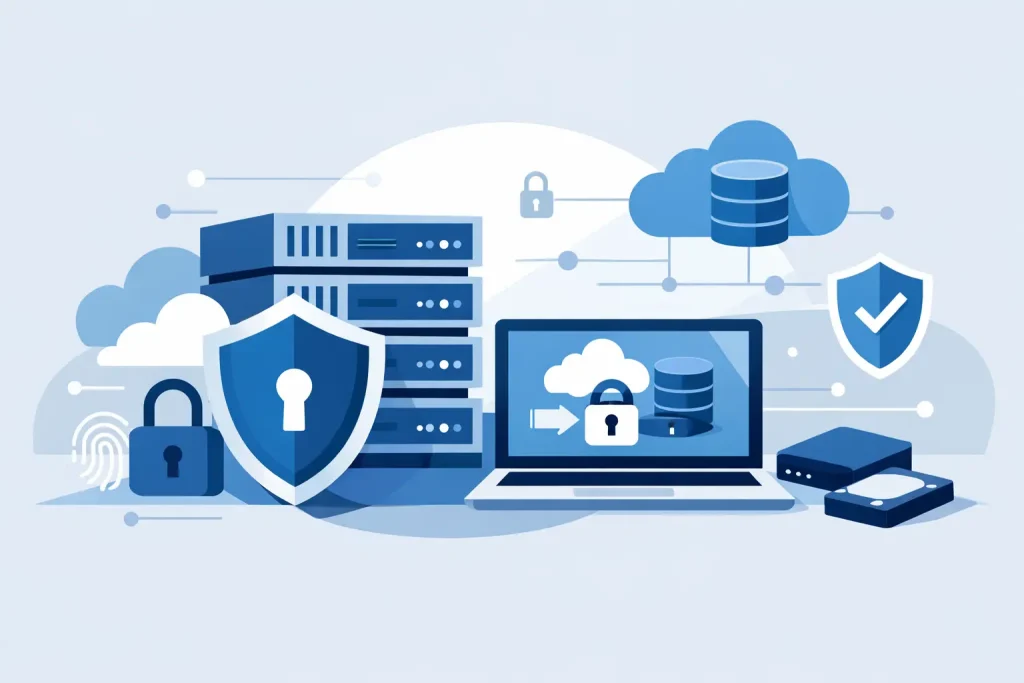
A storage failure rarely starts as a dramatic outage. More often, it begins with a permissions gap, an aging array kept in service too long, or backup policies that looked acceptable until recovery was tested under pressure. This secure storage infrastructure guide is written for IT buyers, infrastructure managers, and procurement teams that need dependable systems with clear business value, not vague promises.
For most organizations, storage decisions sit at the intersection of security, uptime, performance, and budget control. That is why the right approach is not simply buying more capacity. It is selecting an infrastructure design that protects data, supports production workloads, and scales without creating unnecessary operational risk. Whether you are refreshing legacy hardware, building out virtualized environments, or planning for file, database, and backup growth, the storage layer deserves the same scrutiny as compute and networking.
What a secure storage infrastructure guide should actually cover
A useful secure storage infrastructure guide needs to go beyond product labels and capacity numbers. Security is not one feature. It is the result of architecture, policy, hardware reliability, and disciplined administration working together.
At the hardware level, that means choosing enterprise storage systems designed for sustained business workloads rather than consumer-grade alternatives that may look cheaper upfront. In practice, IT teams need to evaluate controller redundancy, drive type, encryption support, power protection, firmware lifecycle, and vendor support options. Procurement teams should also examine supply continuity and support responsiveness, because a strong specification on paper means very little if replacement parts or technical assistance are slow when the business needs them.
The strongest storage environments usually balance five priorities: data protection, access control, recoverability, scalability, and predictable performance. The weighting changes by use case. A legal firm may prioritize retention and access governance. A manufacturing operation may care more about uptime for ERP workloads. A growing SMB may need a cost-conscious platform that supports current demand but leaves room to expand.
Start with workload and risk, not just capacity
Many storage projects get scoped around raw terabytes. That is understandable, but incomplete. Two organizations can each need 100 TB and require very different infrastructure.
File shares with general office documents behave differently from virtual machine storage, database workloads, surveillance retention, or backup repositories. The first step is to map where data comes from, how quickly it grows, who accesses it, and what happens if it becomes unavailable. That last question usually clarifies the design faster than any product sheet.
If downtime would stop business operations, high availability matters immediately. If the data includes financial records, customer information, or regulated content, encryption and role-based access become essential. If recovery time objectives are tight, snapshot strategy and backup architecture need closer attention. If the environment supports mixed workloads, performance isolation may be more important than buying the largest pool possible.
This is also where trade-offs become real. All-flash storage improves latency and consistency, but it may not be the most efficient choice for long-term archive or low-access datasets. Hybrid systems can offer a better cost-to-performance balance for many business environments. Direct-attached storage may suit isolated workloads, while networked storage is often the better fit for shared access, centralized management, and future growth.
Core design decisions that shape storage security
Security at the storage layer depends on how data is stored, exposed, replicated, and recovered. Those choices should be made early, because retrofitting them later is usually more expensive.
Redundancy and fault tolerance
Redundant controllers, dual power supplies, RAID design, and hot-swappable drives are fundamental. These are not premium extras for enterprise environments. They are part of the baseline for continuity. The exact RAID level or protection method depends on workload and performance expectations, but the principle is the same: avoid single points of failure wherever practical.
That said, redundancy is not backup. A redundant array can keep services running through component failure, but it will not protect against deleted files, ransomware encryption, corrupted data, or administrative mistakes. Businesses that confuse uptime features with data recovery often find that out at the worst possible time.
Access control and segmentation
Too many storage environments still rely on broad administrative access. That increases risk. Access should be limited by role, with clear separation between day-to-day users, storage administrators, backup operators, and security personnel where possible.
Network segmentation also matters. Storage traffic should not sit casually exposed on flat infrastructure if better isolation is available. Whether you are using SAN, NAS, or converged platforms, management interfaces deserve tighter controls, strong authentication, and logging that is actually reviewed.
Encryption and key management
Encryption at rest is now expected in many business environments, especially when data mobility, compliance, or multi-site replication is involved. Encryption in transit is equally relevant when data crosses networks or sites. The weak point is often not the encryption feature itself but key management, certificate handling, and inconsistent policy enforcement.
Organizations should confirm how encryption is implemented, who controls the keys, and what recovery options exist if systems fail. Security features that are too difficult to manage tend to be bypassed, which defeats the purpose.
Backup and recovery are part of the storage decision
A storage platform should never be evaluated without considering backup and disaster recovery. If primary storage fails, is compromised, or becomes unavailable, the business still needs a realistic path back to operations.
Snapshot capability is useful for quick rollback and short-term protection, but snapshots alone are not enough. They are part of the same environment and can be affected by the same compromise. A safer design includes separate backup storage, retention policies aligned to business needs, and at least one isolated or immutable recovery path where appropriate.
Recovery planning should also be tested, not assumed. Many businesses have backup jobs that complete successfully and recovery processes that still disappoint when speed and completeness are measured under pressure. Procurement teams should ask practical questions early: how long will full recovery take, what bandwidth is available for replication, and which systems must return first.
For some organizations, offsite replication is enough. For others, especially those with strict uptime requirements, a secondary site or cloud-integrated disaster recovery strategy is more appropriate. The right answer depends on tolerance for downtime, data change rate, and budget discipline.
Performance, growth, and lifecycle planning
Secure storage infrastructure fails quietly when it is undersized. Performance degradation creates user workarounds, delayed backups, longer recovery windows, and operational shortcuts that increase risk. A platform that performs well only under normal conditions may struggle during rebuilds, patching cycles, or end-of-quarter demand spikes.
That is why sizing should include more than current consumption. Consider IOPS, throughput, latency sensitivity, deduplication expectations, and growth over a realistic refresh cycle. It is also wise to account for backup windows, replication overhead, and expansion options before the first shelf is full.
Lifecycle planning matters just as much. Older storage hardware can remain functional while becoming harder to support, slower to patch, and riskier to maintain. Firmware compatibility, drive availability, warranty status, and vendor roadmap should all influence refresh timing. Stretching a platform too long may save budget for a quarter and cost far more when an unplanned failure forces emergency replacement.
Choosing vendors and procurement partners carefully
Technology selection is only part of the decision. Enterprise buyers need confidence in sourcing, support, and post-sale guidance. Authorized channels, genuine hardware, current firmware eligibility, and clear warranty handling reduce procurement risk from the outset.
Major enterprise brands such as HPE, Dell, and Lenovo offer strong storage options across SMB and enterprise requirements, but product fit still depends on your environment. The best choice is not always the most advanced platform. It is the one aligned to your workloads, security expectations, support model, and expansion path.
This is where an experienced procurement partner adds measurable value. Businesses benefit from practical guidance on compatibility, deployment readiness, and pricing structure rather than simply being handed a part number. For organizations buying in the UAE and across the region, EDRC Global supports this process with enterprise-focused sourcing, recognized vendor alignment, and expert assistance that helps teams buy with confidence.
A practical secure storage infrastructure guide for decision-makers
If you are evaluating storage now, begin with business impact, not just hardware preference. Define the workloads, classify the data, confirm recovery expectations, and identify the real consequences of downtime. Then match the architecture to those requirements with attention to redundancy, access control, encryption, backup separation, and lifecycle support.
The most effective storage investments are rarely the cheapest on day one, but they are often the most economical over time because they reduce service disruption, simplify administration, and support growth without repeated redesign. Buy for the environment you are running now, but leave enough room for the one you expect to be running two or three years from today.
Good storage decisions are not only about protecting data. They protect business momentum, purchasing confidence, and the ability to scale without avoidable risk.