
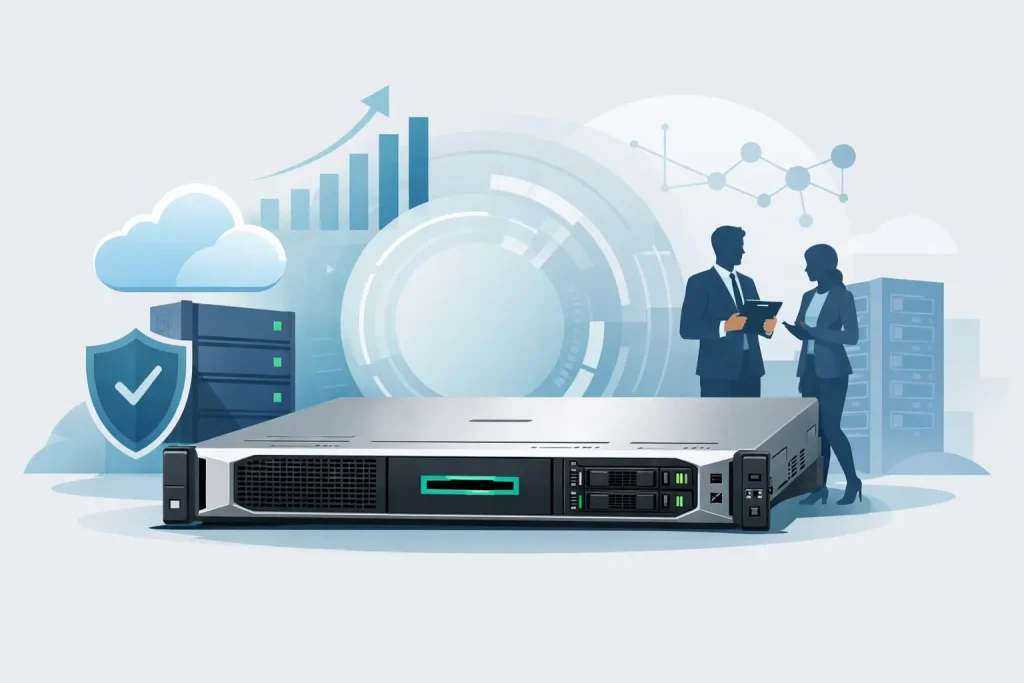
If your server shortlist includes HP ProLiant, the real question is not whether the platform is capable. It is whether the specific model, processor generation, and storage design fit your workload, budget, and growth plans. That is what makes an HP ProLiant server review useful for business buyers – not broad claims, but a clear view of where ProLiant performs well and where configuration choices matter.
For most organizations, HP ProLiant servers earn their place on the shortlist because they balance enterprise reliability with wide deployment flexibility. They are used across virtualization, database hosting, branch office infrastructure, backup environments, software-defined storage, and application hosting. The platform is mature, well supported, and available in enough form factors to serve both smaller businesses and larger data center environments.
HP ProLiant server review: where the platform stands out
The strongest argument for ProLiant is consistency across the portfolio. Whether you are looking at a tower server for a growing office or a rack server for a virtualized environment, the design philosophy remains focused on manageability, component quality, and lifecycle stability. That matters to procurement teams because repeatability reduces deployment risk and simplifies future expansion.
Performance is another clear strength. ProLiant systems are commonly built around current-generation Intel Xeon or AMD EPYC processors, with strong memory capacity and flexible storage options. In practice, that means buyers can configure the same family of servers for very different workloads. A lightly loaded domain controller does not need the same profile as a virtualization host, but both can sit within the same product ecosystem.
The platform also benefits from strong remote administration tools. HPE iLO remains one of the most important reasons many IT teams stay with ProLiant over multiple refresh cycles. Remote access, health monitoring, firmware management, and diagnostics all reduce the burden on internal IT staff, especially when systems are deployed across multiple sites. For organizations with lean infrastructure teams, that operational advantage can matter as much as raw compute performance.
Security is another area where ProLiant has a solid reputation. Built-in firmware protections and silicon-rooted security features help reduce exposure at the hardware layer. That does not replace broader security controls, but it does add an important level of assurance for businesses that need dependable infrastructure for critical workloads.
Performance depends on choosing the right ProLiant model
A fair HP ProLiant server review has to acknowledge that the brand name alone does not tell you enough. A ProLiant ML series tower server serves a very different purpose than a DL series rack server, and buyers sometimes compare them too broadly.
For smaller businesses or remote offices, tower models such as the ProLiant ML line often make sense because they are easier to deploy without a dedicated rack environment. They can provide strong local performance, room for internal storage, and reasonable expansion without forcing the business into a full data center footprint. That makes them practical for file services, local applications, and small virtualization clusters.
The DL series is where ProLiant becomes especially compelling for more structured enterprise deployment. Rack-mounted models are built for denser environments, easier scaling, and better integration into standardized infrastructure. If your business is running multiple virtual machines, resource-intensive applications, or centralized services across departments, DL servers are usually the better fit.
There is also a difference between buying for current demand and buying for the next three to five years. A lower-core configuration may look cost-effective at the point of purchase, but if memory ceilings, drive bay limits, or PCIe expansion become restrictive later, the short-term saving can turn into an expensive refresh. ProLiant generally gives buyers enough flexibility to avoid that problem, but only when the configuration is planned carefully.
Management and lifecycle value
One reason ProLiant remains popular in business environments is that it is easier to operate at scale than many lower-cost alternatives. That does not always show up in a side-by-side hardware comparison, but it becomes obvious over time.
Firmware control, system health visibility, and remote recovery reduce downtime and help teams work faster. If your infrastructure supports branch locations, warehouses, clinics, or retail sites, remote management is not a luxury. It directly affects service continuity and support costs. ProLiant servers are especially strong in these distributed environments because administrators can manage issues without waiting for on-site intervention.
Lifecycle value also depends on parts availability, ecosystem maturity, and vendor-backed support options. ProLiant performs well here because it is widely deployed and well understood by IT professionals, integrators, and procurement teams. Businesses that want less friction during upgrades, maintenance, and hardware replacement usually benefit from that installed-base advantage.
This is also where working with a trusted procurement partner matters. Businesses are not only buying a server chassis. They are buying processor compatibility, memory planning, RAID design, drive media choices, power redundancy, and warranty alignment. Getting those elements right from the start reduces operational surprises later.
Trade-offs buyers should consider
ProLiant is a strong platform, but it is not automatically the right answer for every budget or every workload. The first trade-off is cost. Enterprise-grade components, management tools, and support alignment can make ProLiant more expensive than entry-level server alternatives. For organizations with very basic compute needs, that premium may be difficult to justify unless uptime and manageability are high priorities.
The second trade-off is configuration complexity. ProLiant gives buyers many options, which is a strength, but it also increases the chance of overbuying or underbuilding. A server can be technically powerful yet commercially inefficient if its processor, memory, or storage profile does not match the workload. That is why businesses should avoid treating ProLiant as a one-size-fits-all purchase.
There is also the issue of software licensing and infrastructure planning. If the server will host virtualization, database platforms, or backup tools licensed by core count or hardware tier, choosing a larger system may increase software costs even when hardware pricing looks favorable. The best server decision is rarely about the chassis alone.
Power and cooling should be reviewed as well. Dense rack servers can deliver excellent performance, but they require the right environment. A growing business moving from office-grade equipment to rack infrastructure may need to factor in power distribution, cooling load, and rack space before committing to a higher-density deployment.
Best-fit use cases for HP ProLiant
ProLiant is especially well suited to businesses that need a stable, scalable server platform with room to grow. It performs well in virtualization clusters, ERP and line-of-business application hosting, backup repositories, domain and identity services, and mixed-use infrastructure for small to midsize organizations.
It is also a strong option for organizations standardizing across multiple locations. The combination of model continuity, remote management, and broad support coverage makes it easier to maintain consistency from one site to the next. That is valuable for companies that want predictable procurement and fewer surprises during deployment.
For larger enterprises, ProLiant fits where standardized rack infrastructure, storage integration, and lifecycle planning are already part of the operating model. For smaller companies, it can still be the right choice when downtime carries a real business cost and future scaling is likely.
Final verdict on the HP ProLiant server review
HP ProLiant servers remain a dependable choice for business infrastructure because they combine strong performance, mature remote management, security-focused design, and broad configuration flexibility. Their value is strongest when uptime, operational control, and long-term scalability matter more than buying the lowest-cost server on day one.
The main caution is simple: the platform is only as good as the configuration decision behind it. Buyers should match the server to the workload, expected growth, software licensing model, and deployment environment rather than selecting by brand alone. For organizations that want expert assistance, competitive pricing, and the confidence of sourcing enterprise hardware correctly, EDRC Global can help align the right ProLiant system to real business requirements.
The best server purchase is the one that still looks smart two years from now, when workloads expand and the business expects the infrastructure to keep pace without drama.